
Midnight Reflections

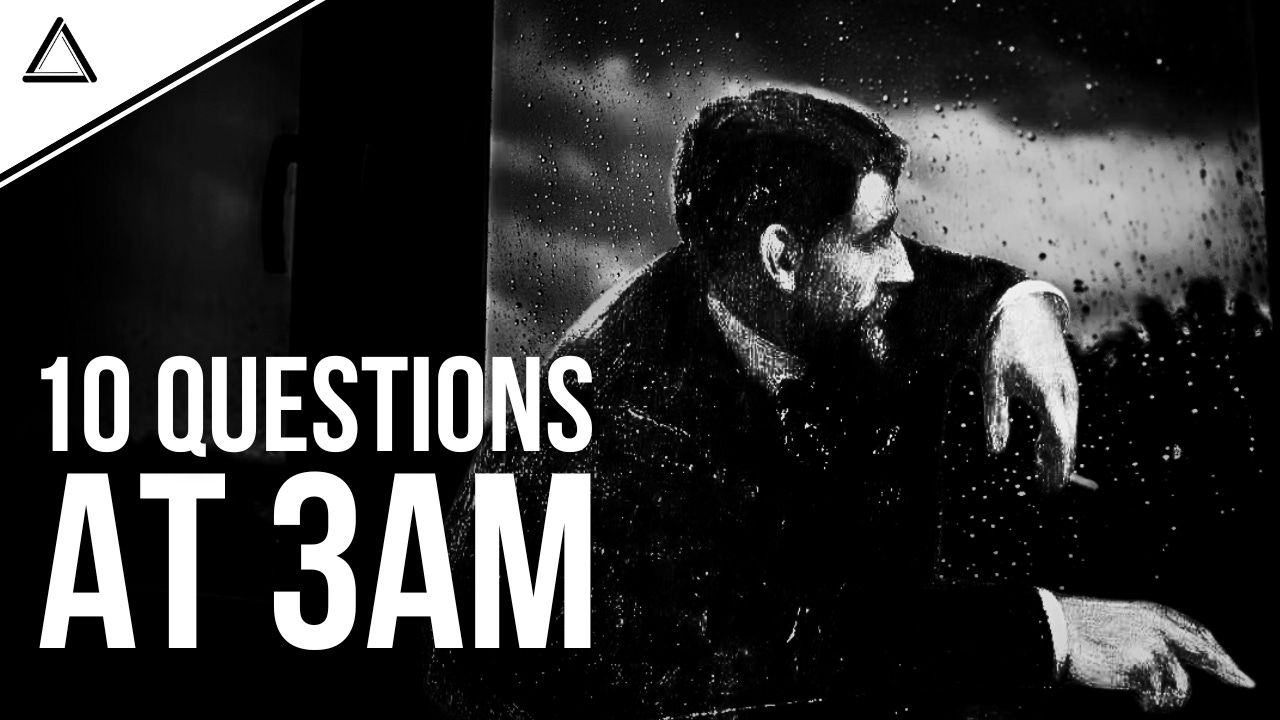
Midnight, right before we fall asleep, is often the most honest time we can feel. For some reason, when our eyes begin to close, thoughts that trigger overthinking suddenly appear. As the world slows down and the lights begin to fade, when the noise around us has quieted, the voice within our hearts starts to speak. A voice that refuses to reveal itself until night arrives—bringing forth the questions we’ve kept buried, the ones we never dared to ask—about life, about purpose, about who we truly are.
During the day, we are consumed by routines—school, university, or work. Life runs like a machine, carried out mechanically, almost lifeless, and lacking depth. There are tasks to complete, goals to chase. In the midst of all this busyness, we rarely pause to question ourselves. We are too occupied to give ourselves time. Routines take up space in our consciousness—forcing us to pretend to be strong, to act as if we know the way, and sometimes, to look as if we are happy.
But nighttime changes everything. With its quiet atmosphere, the world no longer demands our response. There are no more notifications to answer, no more expectations to appear “fine.” In the stillness of night, we stop performing roles for others and slowly begin to uncover our truest selves—or at least, something closer to honesty than what we show during the day.
Night does not demand that we be strong. It does not ask us to find solutions. Instead, it allows the hidden voices we’ve ignored to surface—those quiet whispers about the unfinished matters within us. About the direction of life that feels increasingly unclear, about the childhood dreams we once held tightly but have now lost somewhere along the way, about who we are without the social masks that never truly reflect our real selves.
Sometimes these questions have no answers. Sometimes, we cannot even define what the questions are. But one thing is certain: in those moments, we feel something missing, something unsettled. And we know for sure—nighttime is when we are given the chance to reflect, to pause, and to truly feel everything about ourselves.
In this discussion, we will try to bring clarity to those questions—the ones worth asking in the quiet of the night. Here are ten of them.
Questions to Ask at Night
1. Am I Living My Own Life?
At first glance, this question sounds strange. Of course, the life I am living is my own—how could it possibly belong to someone else? It seems absurd to imagine that my life could be lived by another person, or that I could live someone else’s life. Yet, in reality, this may be more possible than we think. While it is rare that our lives are lived entirely by others, it is very common for us to live our lives according to others.
If we pause for a moment and are brutally honest with ourselves, we might be surprised to realize how many aspects of our lives, how many choices in our daily routines, we make without true consideration—merely for the sake of others. We choose a major, accept a job, or build relationships with strangers simply because it feels safe, makes sense, aligns with what friends are doing, meets parental expectations, or just because “everyone else is doing it.” We adjust, imitate, and go with the flow—until, at some point, we forget that this life is steerable, and that the one life we have belongs to us, not to anyone else.
Asking this question at night is essential. It challenges us to reflect on whether the life we are living—or the direction we are heading—is truly a reflection of our own will, or merely a shadow of systems, social expectations, inherited habits, and external influences. For if we are not the ones choosing our lives, if we are not truly living our own existence, then who is?
“The greatest hazard of all, losing one’s self, can occur very quietly in the world, as if it were nothing at all. No other loss can occur so quietly; any other loss—an arm, a leg, five dollars, a wife, etc.—is sure to be noticed.”
— Søren Kierkegaard, The Sickness Unto Death (1849/1980)
Perhaps the answer does not come from a single voice, but from many voices that have influenced us over the years. The voice of parents who say, “as long as it’s safe.” The voice of school that measures intelligence by numbers. The voice of friends who tie self-worth to achievements. The voice of media that presents a carefully curated “ideal” life as the standard. One by one, these voices carve out a narrow corridor we mistake for choice. And now, here we stand at the end of that corridor, holding a life that has traveled too far, not knowing when or where we first lost our way.
This question can feel heavy, even unsettling. Because once we begin to question everything midway, it is not easy to return to the starting point. By then, we already carry responsibilities, financial pressures, social expectations, and identities shaped by those very choices. Even when we realize that much of our life was never truly chosen by us, we often feel it is too late to change course. For many, this becomes the reason to silence the question altogether—uncertain where or how to begin making changes.
And yet, while we cannot change everything at once, we can start small. We can begin by questioning our habits, clarifying what we genuinely want, or making one different decision—even if it carries risk. However small these steps may be, they all point toward the same direction: reclaiming control over our lives, piece by piece.
2. What Truly Matters to Me?
After asking ourselves whether we are living our own lives, the next question naturally follows: if I do get to choose, then what is truly worth choosing? What really matters to me—something that could serve as a compass, a kind of guide? Many of us spend years chasing something, only to realize later that it was never what we truly wanted. We work hard for achievements, stability, or recognition—only to feel empty once all of it is in our hands.
But how do we know what truly matters, when we have been conditioned to hear the voices of others louder than the voice of our own heart? We often assume that what matters must be grand, visible, and acknowledged by others. Yet in reality, what is most important is often something only we ourselves can understand. It does not need rational justifications, pragmatic explanations, or external validation.
A conversation with an old friend, the relief of making a difficult decision that aligns with our values, the quiet joy of doing something for ourselves, the peace of reading a book while it rains—these are small, intimate things that do not need to make sense to anyone else. What matters most is that they matter to us.
“The thing is to find a truth which is truth for me, to find the idea for which I am willing to live and die.”
— Søren Kierkegaard, The Journals of Søren Kierkegaard (1835/1959)
Perhaps there is no objective tool to distinguish what truly matters from what merely sounds important. One simple way, however, is to notice what makes us feel alive—rather than what merely makes us look good in the eyes of others. What only sounds important often demands that we appear successful, yet leaves us hollow when alone, rarely giving us a genuine sense of life.
What truly matters does not always have to be pleasant, impressive, or inspiring—it is often as simple as something that makes us feel present within it. It makes us feel more honest, more whole, even if it requires losing other things. These experiences quietly shape the way we perceive life.
Another sign is that what truly matters continues to feel right, even when no one else is watching. It does not make us superior to others, but it makes us more aligned with ourselves. It also tends to endure. Its value does not fade with changes in mood or shifts in social trends. And when we neglect it, something inside us quietly senses the loss. To find what matters is also to accept the cost of letting go of many other things.
3. Have I Made Peace with My Past?
Some things are never truly finished; they merely linger. A past that we never face honestly continues to shape us quietly—through the choices we make, the way we react to others, or how we perceive ourselves. Regrets may disguise themselves as perfectionism. Wounds may hide behind ambition. Trauma may reside in the body, surfacing as unexplained anger, irrational fears, or an ingrained sense of unworthiness that we mistake as normal.
These regrets and traumas never completely disappear. We may think we have forgotten them, but in reality, they remain—waiting for the right moment to resurface. When left unaddressed, the past can return in forms we least desire, affecting not only us but also those around us, sometimes even many others.
Night often opens the doors to these buried memories. A single detail can flood the mind: words we never said, decisions we regret, people we disappointed, or the pain caused by others. The darkness brings forth unfinished events that continue to shape how we feel and how we see ourselves.
A child who grew up in a home filled with shouting may carry the fear of loud voices into adulthood—forever anxious, never feeling safe in silence. Someone humiliated for a small mistake in public may still tremble years later when speaking before a crowd. A person once bullied for their appearance, background, or finances may struggle with shattered self-confidence, believing life has no value.
Sometimes the past haunts us through choices we made but cannot undo. Perhaps we left someone behind, abandoned an opportunity, or silenced our heart in the name of security—believing it would bring happiness. Years later, we glance back, wondering, What if I had chosen differently? But such questions often leave us silent, because deep down we know: time cannot be rewound.
We try to comfort ourselves with the thought that everything happens for a reason, that time will heal. But when we are alone, the shadows return—sometimes as regret, sometimes as guilt, sometimes as a whisper saying, “If only time could turn back.” It is then we realize: the past we have not faced will continue to cast shadows on every step we take forward.
We may not need to resolve everything at once. Not every wound can heal quickly, and not every regret can be turned into a lesson without pain. Yet there is quiet courage in admitting that we are not okay. That some part of us is still hurting—and that does not make us weak.
Perhaps making peace with the past is not about forgetting it, but about no longer running from it. It is about sitting with it, even briefly. Listening to what has never been given a chance to speak. Only then can we begin building a future not based on the pretense of being healed, but on the reality of trying—slowly, but sincerely.
4. Will My Life Be Better in the Future?
Anxiety about the future is something that often appears—haunting us, especially when we are alone late at night. Overthinking emerges: worrying not only about whether we will succeed, but also whether our lives will have meaning, whether the paths we take will lead us in the right direction, or whether they might cause us to lose ourselves along the way.
This question matters because it touches on the most fundamental relationship we have with time, where the future is the meeting place of hope and fear—and fear often feels stronger. The world seems to move too fast, too vast, too loud. We feel left behind, constantly losing, never given a pause, even though we may already be running as fast as we can.
« La crainte ou l’espérance se définissent par rapport à l’avenir. »
“Fear or hope is defined in relation to the future.”
— Jean-Paul Sartre, Being and Nothingness (1943)
Sometimes, the anxiety comes without clear reason. We simply feel uneasy. We wake up with heavy chests, our minds racing too far ahead, afraid of making the wrong move. Afraid of failure, afraid of poverty, afraid of humiliation, afraid of being alone, afraid of disappointing those we love—and perhaps most of all, afraid that all our efforts will never be enough.
Scrolling through social media intensifies the feeling. Everyone else seems to know exactly where they’re going: five-year plans, projects, relationships, hobbies, clear goals, and curated versions of happiness and success to showcase. Even when we know these are only highlights, the mere sight of them makes us wonder: Why don’t I feel that certain? Could I ever be like them? Why does my life feel stuck, as if I’m moving nowhere?
What we must remember is that this anxiety is not a weakness. It arises precisely because we are aware that the future is unpredictable, that every choice we make—no matter how small—carries real consequences. That awareness naturally produces tension.
The tension lies in knowing we can give our best and still fail. We can follow every step we believe is right and still get lost. Too much uncertainty and too many external factors can shatter any calculation our minds create about the future.
And so, asking this question—though we will never know the definite answer—helps us at least be honest about our fears. It gives us the strength to keep moving forward, step by step, even in uncertainty.
5. Am I Ready to Face the Fact That Everything Will End?
There is no question more unsettling than this one. We can ignore it, postpone it, or distract ourselves with busyness, but it always returns. And with it comes the reality that no matter what we have, no matter how deeply we love, no matter how hard we fight—everything will eventually end, leaving nothing behind.
“Thus death is my possibility in the sense that I cannot outstrip it; it is the term which awaits me and which gives its meaning to my projects.”
— Jean-Paul Sartre, Being and Nothingness (1943/1992)
Time will keep moving. The people we love will leave. Our bodies will weaken. And one day, we too will be gone, leaving everything behind—the world returning to what it was before we were even born. This question is important because it strikes at the core of all human pursuit: if everything will vanish, then what is all this for?
Imagine standing alone at your father’s grave. The ceremony has ended, relatives have left, and all that remains is the evening breeze, the smell of damp earth, and the cold stone marker. You stare at the name and the dates engraved—just two points in time, a birth and a death. Suddenly, everything in between—his advice, his work, his routines—feels absurd, reduced to two dates on stone.
In that moment, you close your eyes and ask yourself: Am I living a life that, if I were to die tomorrow, I would regret? Have I truly been present in my days, in my actions—or have I merely passed through them? The grief strikes twice: once for losing him, and again for realizing we too will reach this point one day. And no one knows when. The world will go on, but in front of that gravestone, for a brief moment, we feel how fragile life is—and how time is never ours to postpone.
When thought about honestly, death is terrifying, because it reminds us that everything could end at any time. Yet precisely because of that, death becomes the most honest mirror. It forces us to view life from a distance, to sort what is truly important from what is trivial.
Thinking of death teaches us to see time as finite. It reminds us that we cannot afford to waste it carelessly. And once we realize this, we begin to value each decision, each moment, each day—with a depth we might otherwise overlook.
6. Am I Truly Known and Understood by Others?
We can be surrounded by crowds, engaged in conversations, even loved by others—yet still, there is a part of us that feels alien. Loneliness is not always about the absence of company; it is about the sense of not being truly understood. Night often exposes this kind of loneliness. When the world stops demanding that we play social roles, we begin to ask: Is there anyone who really knows who I am, who understands the deepest parts of my heart—or am I only showing the face they expect to see?
This question matters because it touches on one of humanity’s most basic needs: the need for recognition. From childhood, we learn to speak, behave, and respond in ways that will make us accepted. We learn that love often comes with conditions, that recognition often depends on the roles we perform. We become the “smart child,” the “fun friend,” the “strong partner”—not because those roles are our whole selves, but because they make us acknowledged.
Yet this question leads us into a dilemma. We long to be understood, but at the same time we fear revealing our full selves. We want others to enter the depths of our inner world, but we worry they might not accept us if they did. So we show just enough—safe fragments, acceptable parts. The rest, we keep hidden. As a result, the recognition we receive feels incomplete, because what others know is not our truest self, but a filtered version.
“The look which the Other directs on me is not a pure and neutral look: it is a value-conferring look, it is an appraisal. Through the look of the Other I experience the Other as freedom, and at the same time I experience myself as being seen.”
— Jean-Paul Sartre, Being and Nothingness (1943/1992)
When others look at us, we feel objectified—turned into something observed and judged. Others can never see us fully as we experience ourselves; they only see the visible, the performed. Yet there is another side to this. Precisely because we can never be completely understood, relationships remain alive. If someone could understand us one hundred percent, perhaps we would lose all mystery, all privacy, all space to change. The feeling of not being fully known can be seen not only as a limitation but also as a space of freedom. There is always a part of us that belongs only to ourselves, beyond the gaze of anyone else.
We must also be honest: no one can fully carry the entirety of who we are. Even the closest people cannot always be present, cannot always understand. If we demand others to know us completely, we will always be disappointed. Perhaps it is more realistic to accept that understanding will always be partial—and our task is to choose carefully to whom we dare reveal the more authentic parts of ourselves.
In the end, this question leads us not only to our relationships with others, but also to the relationship we have with ourselves. Before expecting to be understood, we must have the courage to understand ourselves. Night gives us that space: to listen to the voices we keep hidden, to acknowledge the sides we conceal, and to make peace with the fact that not everyone has to know. If we can accept ourselves with this same honesty, then even if others understand only in part, we will no longer feel completely alien in this world.
7. Is the Love I Hold Genuine, or Merely a Mask for My Needs?
Love is often regarded as the purest feeling—something that transcends calculations of gain and loss. But if we are honest, is the love we feel always genuine? Have we truly loved others selflessly? Or is love, more often than not, a mask for other needs: the need for security, recognition, comfort, or simply the need not to be alone?
When the world grows quiet, we look at our relationships—whether with partners, family, friends, or even with those we admire from afar. We ask: Do I truly love them, or am I only afraid of losing the warmth they give? Do I care for them as they are, or do I care because they fill the empty spaces within me?
Love always carries a paradox. On the one hand, it seems unconditional, making us willing to give without counting, even willing to be hurt. On the other hand, in our deeper honesty, there are often hidden expectations. We want to be loved back. We want to be valued. We want to feel significant. We want what we give to be reciprocated. None of this is inherently wrong—after all, humans are complex beings—but this awareness makes love less simple than we like to believe.
“Love is an activity, not a passive affect; it is a ‘standing in,’ not a ‘falling for.’ In the most general way, the active character of love can be described by stating that love is primarily giving, not receiving.”
“The main condition for the achievement of love is the overcoming of one’s narcissism. The narcissistic orientation is one in which one experiences as real only that which exists within oneself, while the phenomena in the outside world have no reality in themselves, but only in so far as they serve one’s needs.”
— Erich Fromm, The Art of Loving (1956/2006)
In any relationship, there is a tendency to turn others into “remedies.” We seek partners or friends to ease our loneliness, family to give us security, communities to fill our emptiness. Yet if love rests only on need, it is fragile. Once the need is no longer fulfilled—when a partner stops giving attention, when a friend drifts apart, when family no longer provides support—love can quickly vanish, replaced by disappointment or anger.
Perhaps this is where the depth and sincerity of our relationships are tested: Will we still love and care when there is no benefit to gain? Will we still love someone when they fail to meet our expectations, when they age, when they stumble, when they can no longer “give” as they once did? These are difficult questions, because the answers are often less beautiful than we hope. Many believe their love is genuine, yet when tested by time and circumstances, they discover it was more dependent than giving.
This does not mean that love ceases to be real if it involves need. As human beings, we are inevitably dependent. No love is completely free of need, for we long for warmth and recognition. The difference lies here: is the need the central reason for love, or merely a part of something larger? If love stops at need, it withers quickly. But if need is acknowledged, transcended, and deepened, love can grow into a space where two people meet as subjects—whole beings—rather than merely as fillers of each other’s voids.
8. Does the Suffering in My Life Have Meaning?
No human being can escape suffering. It takes many forms: losing someone we love, the physical pain that eats away at the body, failures that shatter self-esteem, or even the quiet loneliness that haunts daily life. We try hard to push suffering away with entertainment, hard work, or any kind of escape—but sooner or later, it comes back to meet us.
“Für die Lehre vom Ziele des Daseins fehlt der Schmerz ebenso sehr wie das Glück: oder vielmehr: der Schmerz ist das Werkzeug jenes Ziels.”
“For the teaching on the purpose of existence, pain is no less important than happiness: indeed, more precisely, pain is the instrument of that purpose.”
—Nietzsche, F. (1974). The Gay Science (W. Kaufmann, Trans.). Vintage. (Original work published 1882)
Some people firmly reject the idea of giving meaning to suffering—they believe it is simply one of life’s many absurdities. There is no cosmic reason, no hidden purpose. Searching for meaning behind pain, they argue, is a form of self-deception. What matters is not why we suffer, but how we continue to live and love life despite the lack of answers. Suffering becomes a fact to accept, not a riddle to solve.
Of course, there is also the opposing view: that suffering carries meaning or lessons—ones that may shape us into better human beings. These two views clash, but in that tension lies something deeply human. On one hand, we know suffering can destroy—it can steal our will to live, break us into pieces, even kill our desire to endure. Yet on the other, we also know that sometimes suffering deepens us, makes us more humane. From loss, we learn love. From pain, we learn gratitude. From failure, humility. It is as if suffering holds within it a painful form of revelation.
Night often makes these layers clearer. Pain we can distract ourselves from during the day suddenly emerges more vividly. Old wounds resurface, fears creep in, tears fall without reason. And within us, two competing voices appear. One says: “this is pointless, meaningless.” The other whispers: “perhaps there is something here to discover.”
The truth is that suffering is never simple. It does not automatically teach us, nor does it always make us stronger. Some are broken for life by trauma, consumed by bitterness or vengeance, or left unable to trust again. Yet there are others who, somehow, find new meaning in the cracks—a flower that grows through the wall’s fracture.
Still, finding meaning in suffering does not mean glorifying it. Pain can be brutal, blind, and unbearable. Precisely for this reason, seeking meaning is a fragile choice—a way of refusing to let suffering be nothing more than emptiness. We can resist, rage, and weep, yet at the same time try to weave together the remaining fragments, so that suffering does not become the end of our story.
Ultimately, this question has no definitive answer. Perhaps some suffering will never be understood. But even in that lack of understanding, we can choose: will we let suffering erase our will to live, or will we make it part of our journey?
9. Am I Truly Myself, or Just Wearing a Mask?
In everyday life, we almost always perform for others. We smile when we need to be polite, hold back anger when we want to scream, and try to appear strong when we are sad. Even simple things—our clothing, the way we speak, or what we post on social media—are often forms of performance. This makes us wonder: am I really myself, or am I merely playing the roles others expect of me?
This question arises because we know the face we show others is not always completely honest. We can genuinely care, feel joy, and be proud, but we also know much of our expression comes from social demand. At night, when those demands fade, this uneasiness often surfaces. There is no more audience, no more stage. We are left alone with our own face, asking: if all roles were stripped away, what would remain? Is there an “authentic self” behind all the masks, or am I nothing more than a collection of roles shifting with circumstance?
What makes this question troubling is that roles are both necessary and exhausting. We cannot live without them—social life demands adaptation. But roles performed endlessly without pause can alienate us from ourselves. We become skilled at playing many faces, yet estranged from what we truly feel. This phenomenon is amplified in today’s world. Public space no longer exists only in streets or offices, but in the small screens we carry everywhere. Photos, statuses, and messages create miniature stages where we perform. We polish words, choose the best images, and carefully curate our image.
“Take the example of a café waiter. His movement is a little too precise, a little too rapid. He comes toward the patrons with a step a little too quick. He bends forward a little too eagerly; his voice, his eyes express interest a little too solicitous for the order of the customer. He plays at being a café waiter.”
—Sartre, J.-P. (1992). Being and Nothingness: A Phenomenological Essay on Ontology (H. E. Barnes, Trans.). Washington Square Press. (Original work published 1943)
Human beings always live between the authentic and the performed. None of us is entirely free from roles. The difference lies in whether our roles express who we are, or conceal it. Some roles make us feel whole—when we truly enjoy our work, or feel genuine care in supporting someone. But others feel like suffocating masks, forcing us to become something against our will. Night gives us space to examine these roles. In the stillness, we can ask: do my roles express me, or bury me? Am I willing to keep wearing a face that is not mine, just to be accepted?
Perhaps we cannot discard roles entirely. But we can choose which roles to keep—those that make us more honest, more joyful, more alive—and which ones to let go, even at the risk of rejection. In the end, the question is not about uncovering some pure “true self” untouched by masks, but about how much courage we have to ensure our roles remain aligned with the truth of our inner being.
10. Is There Something Greater Than Myself?
There are certain moments at night when we gaze at the dark sky and realize how small we are before the vastness of the universe. Or when we close our eyes and hear the sound of our own heartbeat, suddenly reminded that life can end at any time. In those moments, a question emerges: am I living only for myself, or is there something greater, something that sustains a meaning beyond the reach of this life?
“There is no more certain temptation for man than to find someone to whom he can quickly hand over that gift of freedom with which this unhappy creature is born.”
— Dostoevsky, The Brothers Karamazov (1880/1990)
This question can lead us in two very different directions. The first is metaphysical–spiritual. Humanity has an enduring longing to believe that life does not end with the pursuit of happiness or with death itself. That there is something beyond us—perhaps God, perhaps eternal life—that makes our journey in this world more than just a biological coincidence and not the ultimate end. Many find comfort in the belief that their suffering has a place within a larger order and that death is not an absolute conclusion. Such belief provides an anchor that makes the night not entirely dark.
But there is also another perspective. Some may not find answers in religion or metaphysics, yet they still feel that the self does not stand alone. Human life is always connected—to others, to society, even to the planet. We work not only for ourselves but also for our families. We struggle not just for personal gain but often for those we love. In this sense, “something greater” is not transcendent but relational: community, solidarity, humanity.
Of course, this question also brings unease. We can never be fully certain whether there truly is something greater. Believers still experience moments of doubt, while non-believers still feel a quiet yearning for something beyond themselves. The night sharpens that longing. We feel too small to bear life alone, yet we have no guarantee that something out there truly supports us.
Perhaps it is this very uncertainty that makes the question essential. It does not demand a final answer but reminds us that we are always reaching for meaning beyond the limits of ego. We always look upward—whether to the sky, the faces of others, or the shared bonds of humanity. We want to believe that life is not only ours but part of something larger.
The Day After the Night
After a long night, life returns to its ordinary course. Morning arrives without asking whether we have found any answers. The world continues, fast-paced and demanding, indifferent to whether we feel fragile or unsettled. After all the reflections, after the questions that shook the foundations of our identity, after we revisited past wounds and glimpsed the shadows of future fears—will we truly live differently? Can we carry that honesty into daylight, or will everything return to how it was before?
We often imagine that deep reflection will transform our lives. But reality does not always follow. We return to routines: working, replying to messages, making plans, moving with the familiar current. It feels easier that way, because the restlessness that surfaces at night can be too heavy to carry into the day—too honest, too demanding, too draining to truly change our lives. And so we let it fade, as though nothing happened.
There is something ironic here. We fear living a lie, yet we also fear the kind of honesty that would require us to change. We want a whole life, but we also crave comfort. So after reflection, many of us return to routine—perhaps because we truly do not know what step to take next. The awareness born at night is powerful, but without clear direction, it is easy to slip back into old habits. Slowly, the truths that once felt urgent begin to fade.
This is part of being human. To live is to exist in unresolved tension. We know our limitations, yet we dream of freedom and of grasping as much as possible. We want to be honest with ourselves, but we also want acceptance from a world that demands masks. We yearn for meaning, but we fear the emptiness that might come if those masks fall away. Sometimes we don’t even know which is more painful: living in a comfortable lie, or living in a difficult honesty.
Yet there are also those who cannot fully go back. Something within them has shifted, even if the world outside remains the same. They may not yet know what to do, but they know they can no longer live as before. There is a new desire to seek something truer. They begin to sort through things, to reject, to slow down. They may still look hesitant outwardly, but inwardly they have taken an important step: they are no longer pretending.
Not all change arrives dramatically. Not all midnight reflections end with a grand decision or a revolutionary act. Many of us will not immediately quit the suffocating job, repair the painful relationship, or suddenly discover a new direction in life. But that does not mean nothing has changed. Sometimes what changes is only the way we see things—and that alone is enough to shift how we respond. Sometimes what changes is our sensitivity to what we used to ignore. From such small shifts, life gradually takes a different path.
We begin to pause before saying “yes” to something. We start re-examining why we feel restless instead of dismissing it. We stop talking about success in the same way as before. We no longer follow trends without questioning them carefully. We begin to listen to ourselves. These may seem like small things, but from such small things, the direction of our lives can quietly turn—away from what is imposed, and toward what is more honest.
Dostoevsky, F. M. (1990). The brothers Karamazov (R. Pevear & L. Volokhonsky, Trans.). Vintage International. (Original work published 1880)
Fromm, E. (2006). The art of loving. Harper Perennial Modern Classics. (Original work published 1956)
Kierkegaard, S. (1959). The journals of Søren Kierkegaard (A. Dru, Ed. & Trans.). Harper Torchbooks. (Original work published 1835)
Kierkegaard, S. (1980). The sickness unto death (H. V. Hong & E. H. Hong, Trans.). Princeton University Press. (Original work published 1849)
Nietzsche, F. (1974). The gay science (W. Kaufmann, Trans.). Vintage. (Original work published 1882)
Sartre, J.-P. (1992). Being and nothingness: A phenomenological essay on ontology (H. E. Barnes, Trans.). Washington Square Press. (Original work published 1943)